How to Reduce Customer Acquisition Costs on Shopify Without Increasing Ad Spend
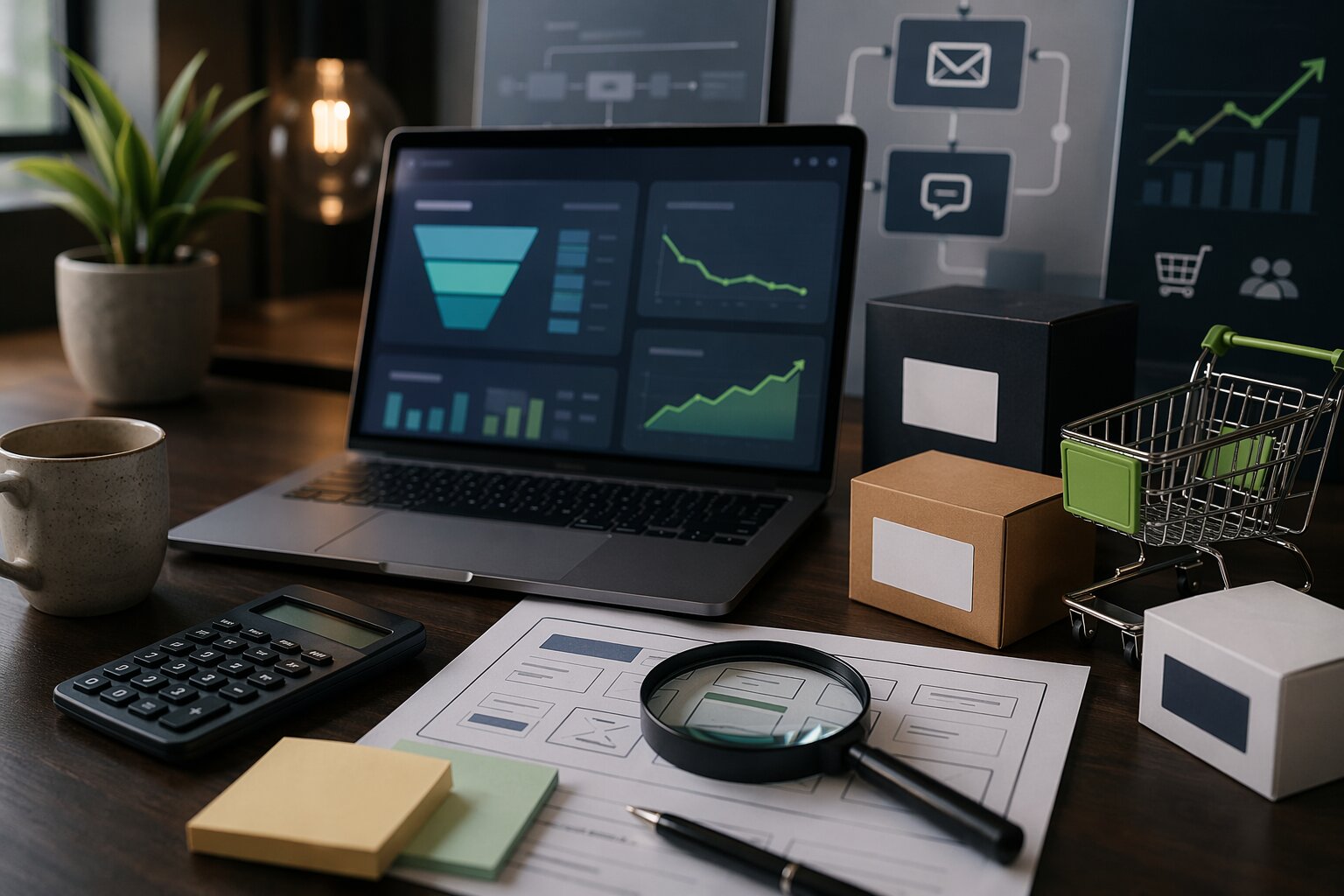
Customer acquisition cost (CAC) is the number that quietly determines whether a Shopify store is actually profitable or just busy. Most merchants focus on revenue. The smarter ones watch what it costs to earn each new customer, because that figure tends to creep upward year over year, especially as paid ad auctions get more competitive.
The good news is that CAC is not purely a media-buying problem. A significant portion of it lives inside your store, your post-purchase flows, and how you structure loyalty. Pull on those levers first, and the return from whatever ad budget you already have improves without a single extra dollar spent.
What Your CAC Number Is Really Telling You
It Is a Ratio, Not Just a Cost
CAC is calculated simply: total acquisition spending divided by the number of new customers gained in the same period. But the ratio only becomes useful when you hold it against customer lifetime value (LTV). A 60CACsoundsalarminguntilyouknowtheaveragecustomerspends60 CAC sounds alarming until you know the average customer spends 60CACsoundsalarminguntilyouknowtheaveragecustomerspends300 over their relationship with your brand. Context is everything.
Many Shopify merchants confuse blended CAC with channel-specific CAC. Blended CAC averages all channels together, which masks the fact that, say, your Google Shopping campaigns may be acquiring customers at 30whileyourMetacampaignsarecosting30 while your Meta campaigns are costing 30whileyourMetacampaignsarecosting110 for the same outcome. Separating these figures is the first diagnostic step, not an optional one.
The industry average CAC for ecommerce sits between 45and45 and 45and87 depending on the product category, according to data aggregated by FirstPageSage across multiple years of client reporting. If you are above that range and your LTV is not significantly higher than average, the store has an economics problem, not just a traffic problem.
Fix Your Conversion Rate Before Anything Else
More Conversions From Existing Traffic Means Fewer Paid Visits Per Sale
The average ecommerce conversion rate is roughly 1.5 to 3 percent across industries. Moving from 1.5 percent to 2.5 percent means you need 40 percent fewer visitors to generate the same number of orders. That directly reduces the acquisition cost of every paid click you already buy.
Start with your product pages. Slow load times, thin copy, and weak social proof kill purchase intent before it has a chance to convert. Google's research shows that as page load time increases from one second to five seconds, the probability of a mobile visitor bouncing rises by 90 percent. For Shopify and Shopify Plus merchants, one lever worth pulling here is converting your store into a native mobile app. Tools like Shopney let you do that without writing a line of code, and native apps consistently outperform mobile web on speed, session depth, and repeat purchase rate.
Exit-intent popups, when used with a meaningful offer rather than a generic "wait, don't go" message, recover 10 to 15 percent of abandoning visitors, according to data from OptinMonster. That is a meaningful chunk of traffic you already paid for.
Checkout abandonment is the final, critical drop-off point. Shopify's native one-page checkout reduced checkout abandonment rates for merchants by an average of 18 percent after the 2023 rollout, per Shopify's own reporting. If you have not switched, do it now.
Email and SMS Channels That Pay for Themselves
Owned Channels Carry Near-Zero Marginal Cost Per Contact
Email marketing consistently returns around 42for every 1 spent, based on figures from the Data and Marketing Association. That return does not come from acquisition campaigns. It comes from post-purchase sequences, browse abandonment flows, and win-back campaigns that pull disengaged customers back without buying a single new impression.
SMS is more aggressive as a channel, with open rates averaging around 98 percent compared to email's 20 to 25 percent average, according to SimpleTexting benchmark data. The barrier is consent, so building an SMS subscriber list requires deliberate opt-in prompts at checkout and on product pages. Once that list exists, broadcast campaigns to lapsed buyers often generate revenue at a fraction of what a paid retargeting campaign would cost for the same outcome.
The operational discipline required here is segmentation. Sending the same message to a first-time buyer and a customer who has ordered six times is a waste of attention and suppression rate damage. Shopify's native customer tagging combined with tools like Klaviyo or Omnisend makes behavioral segmentation straightforward enough that there is no reasonable excuse to skip it.
Turn Existing Customers Into an Acquisition Channel
Referral Programs Work Because Trust Transfers
Referred customers have a 37 percent higher retention rate than customers acquired through other channels, according to a Wharton School study. They also tend to spend more in their first year. The math on a referral program is simple: you are paying an incentive only when an acquisition actually happens, which is fundamentally different from paying for clicks that may or may not convert.
Shopify apps like ReferralCandy or Friendbuy plug directly into your order flow and automate the referral ask at the point of highest satisfaction, right after a successful purchase. The timing matters enormously.
A poorly structured referral program offers a discount that cannibalizes margin without delivering loyalty. Tie the reward to store credit rather than a percentage discount, and you pull the referred customer back for a second purchase almost automatically.
The incentive for the referrer needs to be meaningful, not symbolic. A 5creditona5 credit on a 5creditona200 average order value is invisible. Ten to fifteen percent of order value, or a tangible gift with purchase, is what actually motivates sharing behavior.
Organic Search as a Structural Cost Reducer
SEO Lowers CAC Over Time Because the Traffic Compounds
Paid traffic stops the moment you stop paying. Organic traffic from search compounds. A product category page that ranks on page one of Google for a high-intent keyword drives acquisition at a cost that approaches zero over time, since the content investment is a one-time fixed cost rather than an ongoing variable one.
The category most Shopify stores neglect is collection page SEO. Product pages rotate and go out of stock. Blog content targets informational queries, not buyers. Collection pages, optimized with clear taxonomy, structured internal links, and substantive on-page copy, target customers who are already in purchase mode. A query like "men's waterproof trail running shoes under $150" has strong commercial intent, and a well-optimized collection page captures it without an ad.
Building organic authority is a longer game, typically six to twelve months before meaningful ranking gains appear. But the math over 24 months is compelling. A study by Ahrefs found that the top-ranking page for a given keyword gets roughly 27 percent of all clicks. At scale, even a handful of high-ranking collection or product pages can generate thousands of monthly sessions at no marginal cost.
The Loyalty Mechanic Most Stores Get Backwards
Repeat Purchase Rate, Not Discount Depth, Is the Real Lever
Here is what most Shopify CAC guides miss: chasing new customers more efficiently is only half the answer. The other half is changing how you account for CAC in the first place.
When a customer buys twice, the blended CAC across both orders effectively halves. When they buy four times, the original acquisition cost becomes almost irrelevant. The strategic implication is that improving repeat purchase rate from 20 percent to 35 percent, which is achievable through post-purchase flows, loyalty programs, and subscription nudges, lowers your effective CAC across the entire store without touching a single ad campaign.
Most loyalty programs are structured around points accumulation, which creates a delayed gratification loop that many customers disengage from before ever redeeming. A more effective structure, supported by research from Bond Brand Loyalty, gives customers a meaningful reward after their second purchase, not their fifth. That timing reinforces the return behavior before it has a chance to lapse.
The contrarian point here: stopping a customer from leaving is cheaper than finding a new one, but most merchants invest almost nothing in the period between the first and second order, which is exactly where the decision to return or disappear gets made. That 30 to 90 day post-purchase window is where retention, and therefore effective CAC, is actually determined.
Start With the Number You Can Move This Week
One Change, Measurable Within 30 Days
Pull your Shopify analytics and calculate the percentage of customers who placed a second order within 90 days of their first. That single metric, your 90-day repeat purchase rate, tells you more about your actual CAC trajectory than any dashboard of ad metrics. If the number is below 25 percent, build a three-email post-purchase sequence targeting customers at day 14, day 30, and day 60 after their first order, each with a distinct angle: product education, a complementary item recommendation, and a time-bound return incentive. Run it for 30 days, measure the lift in repeat rate, and recalculate your blended CAC. The improvement will be visible, specific, and replicable.